
For decades, cable TV has been one of the most common ways Americans watch television. Even today, when streaming services dominate headlines, millions of households still rely on cable TV for daily news, live sports, and local programming.
For beginners, however, cable TV can feel confusing. People often wonder what cable TV actually means, how it works without the internet, and whether it is still a good option in 2026.
Understanding the basics of cable TV first makes everything else easier, from choosing a package to knowing what equipment you actually need. When the foundation is clear, the decision stops feeling technical and starts feeling practical.
What Is Cable TV?
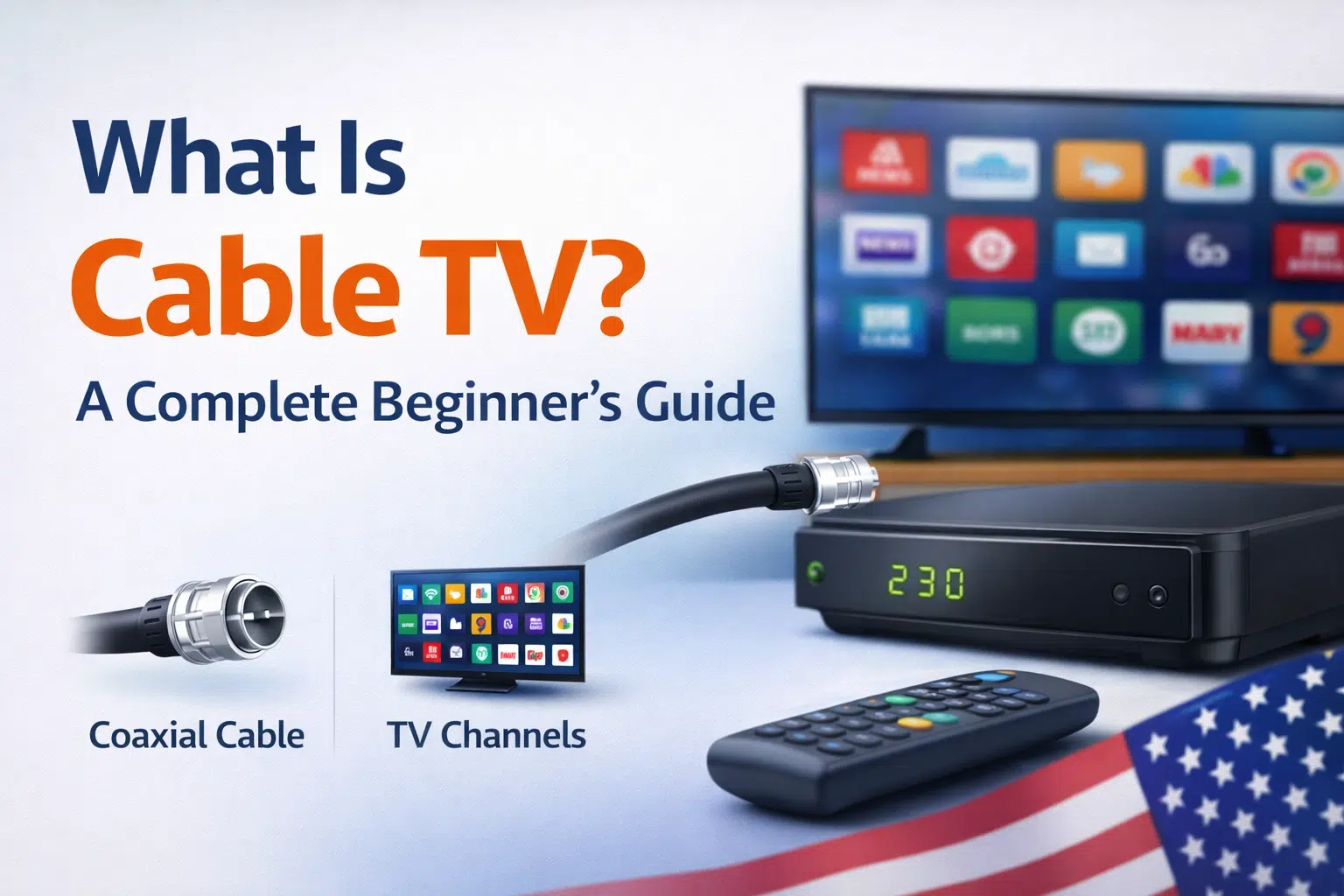
Cable TV is a television service that delivers channels to your home through a physical cable network. Instead of using an antenna or the internet, it relies on underground or overhead cables installed by a cable company.
When you subscribe to cable TV, your provider connects your home to its cable network. Television signals travel through these cables and reach a device inside your house, usually called a set-top box. This box converts the signals into pictures and sound that appear on your TV screen.
In simple words, cable TV is a wired television service that works independently of the internet. This is one of the main reasons why many households still prefer it for reliable daily viewing.
A Brief History of Cable TV in the USA
Cable TV began as a solution to a basic problem. In the early days of television, many rural and hilly areas could not receive clear broadcast signals through antennas. To solve this, local companies installed large antennas in high locations and used cables to carry the signals to nearby homes.
Over time, cable companies expanded their services. They added more channels, premium movie networks, and live sports programming. By the late 20th century, cable TV had become the dominant television service in American homes.
Although streaming services have changed viewing habits in recent years, cable TV has not disappeared. Instead, it has slowly evolved with digital technology and bundled services.
How Does Cable TV Work?
Cable providers collect television signals from many sources, including local stations, national networks, sports broadcasters, and premium channels. These signals are processed at central facilities and then sent through large cable networks that cover entire cities.
When the cable line reaches your home, it connects to a set-top box. This box decodes the incoming signals and displays the channels on your television. You use a remote control to change channels and access features.
One important difference from streaming is that cable TV does not depend on your internet connection. Even if your internet stops working, cable TV usually continues to function.
What Equipment Do You Need?
Cable TV requires only a few basic devices, most of which are provided by the cable company. The most important device is the set-top box. Without this box, your television cannot display cable channels.
Many providers also offer a DVR, or digital video recorder. This allows you to record live programs, pause shows, and watch them later. For families with busy schedules, this feature is very useful.
If you bundle cable TV with internet service, you may also receive a cable modem, but this is used only for internet access.
Types of Cable TV Packages
Cable TV is offered in different packages depending on the number and type of channels.
Basic packages usually include local broadcast channels and a few essential networks. These are suitable for users who mainly watch news and local programs.
Expanded packages are more common and include entertainment, kids’ channels, lifestyle networks, and sports channels. Most families choose this type of plan.
Premium packages are optional add-ons. These include movie channels, special sports networks, and international programming. You pay extra for each premium service you select.
How Cable TV Is Different from Streaming TV?
Although both provide television content, cable TV and streaming TV work in very different ways.
Cable TV uses physical cables and follows a fixed schedule. You watch programs when they are broadcast.
Streaming TV uses the internet and gives you more control. You can choose what to watch, when to watch it, and on which device.
Cable TV is more traditional and structured, while streaming TV is more flexible and personalized.
Advantages of Cable TV
One major advantage is reliability. Because it does not depend on the internet, cable TV usually provides a stable signal with very little buffering or interruption.
Cable TV also provides easy access to local channels. This includes local news, weather updates, and emergency broadcasts, which are important for many households.
Live sports coverage is another strong point. Many major sports networks are included in cable packages, making it easier for sports fans to watch games without managing multiple subscriptions.
Finally, cable TV is simple to use. There are no apps to manage and no accounts to log into. This makes it popular among seniors and non-technical users.
Disadvantages of Cable TV
The most common issue is cost. Cable TV packages are often more expensive than streaming services, especially after promotional periods end. Equipment fees and taxes can increase the monthly bill.
Many plans also require long-term contracts. Canceling early may result in a penalty.
Another limitation is content flexibility. Compared to streaming, cable TV offers fewer on-demand options, and you may need a DVR to record programs you miss.
Who Should Still Choose Cable TV in 2026?
Cable TV is not the best choice for everyone, but it still suits certain users.
It works well for families who watch live TV regularly, sports fans who need regional networks, and seniors who prefer simple technology. Homes with unreliable internet connections may also benefit from cable TV.
On the other hand, people who mainly watch on-demand shows, want the lowest possible cost, or prefer using multiple devices may find streaming services more suitable.
Is Cable TV Still Relevant Today?
Cable TV is no longer growing rapidly, but it is not disappearing either.
In 2026, many households use a combination of cable and streaming. Cable is mainly used for live content, while streaming is used for movies and series.
Cable providers continue to adapt by offering better picture quality, cloud DVR, and bundled internet services. This shows that cable TV is evolving rather than becoming obsolete.
Common Beginner Mistakes
New users often make simple mistakes when choosing cable TV.
Some people select packages without checking which channels they actually need. Others forget to ask about contract length, promotional pricing, or extra equipment fees.
Many users overpay for premium channels they rarely watch. Taking time to compare plans can prevent these problems.
Conclusion
Cable TV remains an important television service in the United States, even in 2026. While streaming services offer flexibility and lower prices, cable TV continues to provide reliable live programming, strong sports coverage, and easy access to local channels.
For beginners, the best approach is to understand how cable TV works, compare packages carefully, and choose a plan that matches your viewing habits and budget.
In the next guide, we will explain how streaming TV works and how to decide between cable and streaming services.
FAQs:
Q. Is cable TV the same as satellite TV?
Ans: No. Cable TV uses physical cables, while satellite TV uses signals from satellites and requires a dish installed outside your home.
Q. Do I need internet for cable TV?
Ans: No. Traditional cable TV works without an internet connection, although many people bundle both services together.
Q. Can I use cable TV on more than one TV?
Ans: Yes. You usually need one set-top box for each TV in your home.
Q. Is cable TV more expensive than streaming?
Ans: In many cases, yes. Cable TV is usually more expensive than one or two streaming subscriptions, especially after promotional offers end.
Q. Can I cancel cable TV anytime?
Ans: Most cable plans have contracts. You should always check cancellation rules and early termination fees before subscribing.
Q. Does cable TV include local channels?
Ans: Yes. One of the main advantages of cable TV is easy access to local news, weather, and regional programming.
Read Also:
How Parental Controls Work on TV Services
How to Set Up Streaming TV on Smart TV
Best TV Packages for Families in the USA
How to Fix Common TV Signal Problems
What Is Streaming TV and How Does It Work in the USA
Cable TV vs Streaming TV: Which Is Better in the USA?
How to Set Up Cable TV at Home (Step-by-Step Beginner Guide)