
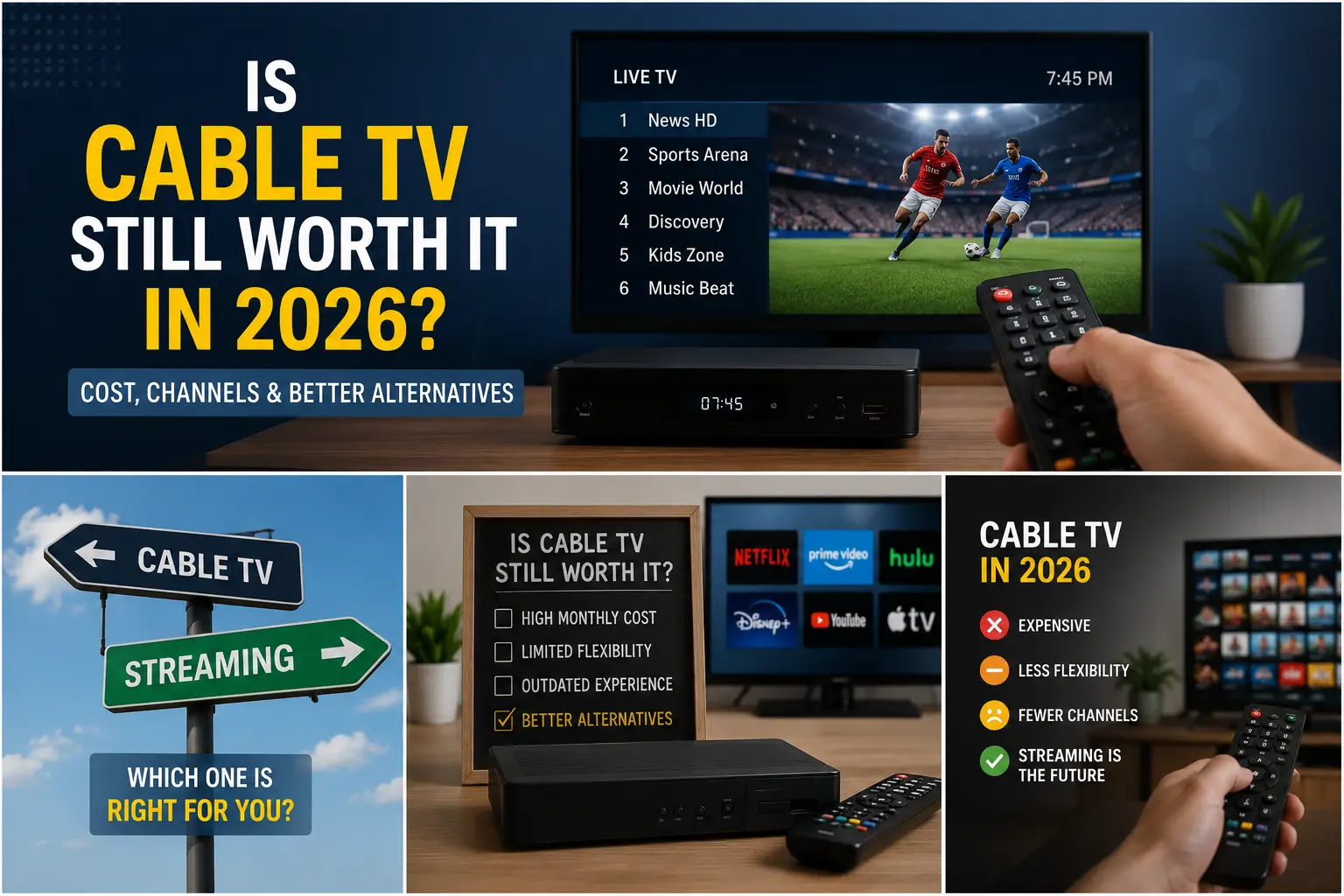
A few years ago, many people believed cable TV would completely disappear. Streaming services were growing rapidly, monthly cable bills were increasing, and viewers wanted more flexibility.
Millions of households started canceling traditional TV subscriptions and switched to platforms that allowed them to watch content anytime on phones, tablets, and smart TVs.
But even in 2026, cable TV is still around. In fact, it continues to play a major role in many homes across the United States.
While streaming has changed how people consume entertainment, cable still offers advantages that some viewers don’t want to give up, especially when it comes to live sports, local news, and reliable television service.
The conversation today is no longer about whether cable is “dead.” Instead, people are asking whether cable TV still provides enough value compared to the growing number of streaming options available.
For some households, the answer is yes. For others, streaming services have already replaced most of what cable once offered.
The reality is that television habits are becoming more personal and fragmented. Some viewers want simplicity and live channels in one place, while others prefer complete control over what they watch and pay for.
That’s why the value of cable TV in 2026 depends heavily on viewing habits, internet quality, budget, and the type of content people watch regularly.
Why So Many People Left Cable TV?
The biggest reason people started leaving cable TV was cost. Traditional cable packages became expensive over time, especially once equipment rentals, regional fees, taxes, and premium channel charges were added to the monthly bill. Many customers felt they were paying for hundreds of channels they never actually watched.
Streaming services appeared to solve this problem. Instead of buying a large channel bundle, viewers could subscribe only to the platforms they wanted. This gave people more flexibility and removed the need for long-term contracts in many cases.
Another reason cable lost popularity was convenience. Younger viewers especially became comfortable watching content on demand instead of following traditional TV schedules. They preferred opening an app and instantly watching a series or movie whenever they wanted.
The rise of smart TVs also accelerated this shift. Televisions no longer depended completely on cable boxes because streaming apps were built directly into TVs. For many households, cable started feeling less essential than it once was.
At the same time, internet speeds improved across many regions, making streaming more reliable than it had been during the early days of online video platforms.
Why Is Cable TV Still Worth It in 2026?
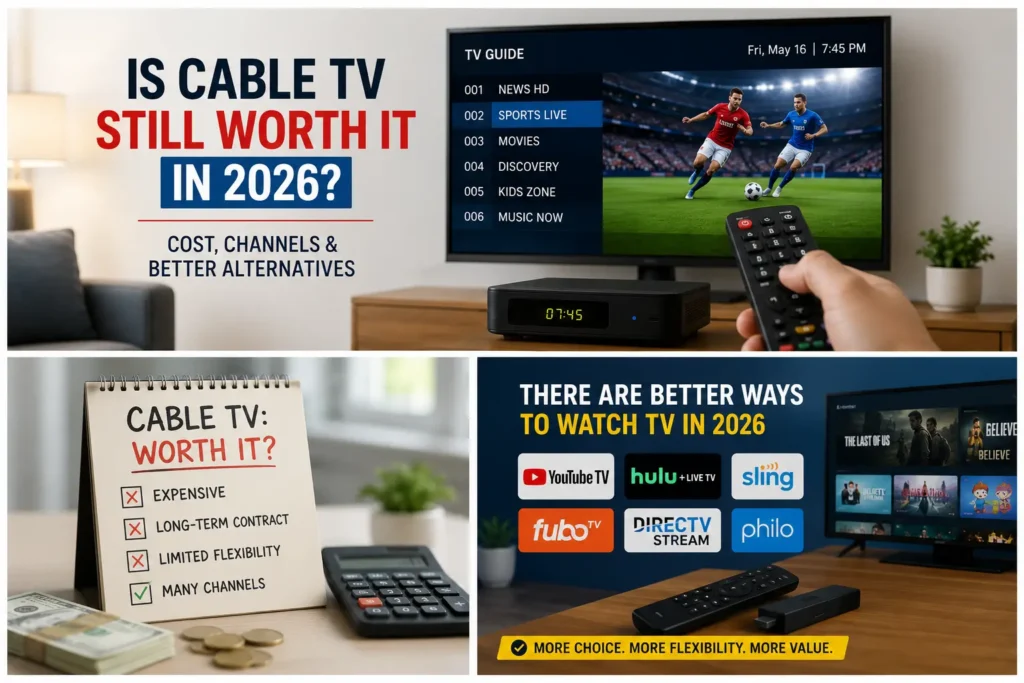
Even after years of decline, cable TV still offers advantages that streaming services haven’t completely replaced. One of the biggest examples is live sports.
Sports fans often discover that following their favorite teams through streaming alone can become complicated very quickly.
Games are now spread across multiple apps and services. A single season may require separate subscriptions for national broadcasts, league-specific apps, and regional sports channels.
Cable still keeps many of these channels together in one place, which makes the experience simpler for dedicated sports viewers.
Cable also remains strong for live news coverage. Local news stations, weather updates, and regional programming are still easier to access through traditional television systems in many areas.
Older viewers, especially, continue to rely heavily on these channels as part of their daily routine.
Another important factor is reliability. Streaming depends entirely on internet quality, while cable television typically provides more stable live viewing.
During major sports events or breaking news coverage, cable often feels smoother and more dependable than streaming platforms that may struggle with buffering or delays.
Many households also appreciate the simplicity of cable navigation. Traditional channel guides and remote controls still feel easier for some viewers compared to constantly switching between different apps and subscriptions.
Streaming Isn’t as Cheap as It Used to Be
One reason the conversation around cable TV has changed in recent years is that streaming itself has become more expensive. During the early cord-cutting years, viewers could save significant money by replacing cable with a few affordable subscriptions.
That situation has changed dramatically. Today, many households subscribe to multiple services at the same time. A family may pay separately for live TV streaming, movie platforms, sports subscriptions, kids’ content, and premium entertainment apps. Once combined, the monthly total can become surprisingly high.
Streaming platforms have also introduced more advertising. Many lower-priced plans now include ads, while ad-free experiences cost extra. This has frustrated viewers who originally switched to streaming partly to avoid traditional television advertising.
Content fragmentation has created another problem. Popular shows, sports rights, and movies are now divided across many different services. Instead of opening one cable box, viewers often need to remember several apps, passwords, and subscriptions.
In some cases, people who cut the cord expecting lower costs now realize they are paying almost the same amount they once paid for cable, just through different platforms.
Sports Are Keeping Cable Alive
If there’s one category where cable still performs extremely well, it’s sports broadcasting. Live sports continue to attract huge audiences, and many fans prefer the simplicity of traditional TV coverage.
Streaming sports has improved, but it can still feel fragmented. A fan may need one service for football, another for basketball, and another for regional coverage. This becomes expensive and confusing very quickly.
Cable providers still offer centralized sports packages in many regions. Instead of switching between apps, viewers can simply browse sports channels through a familiar guide. That convenience matters more than many people realize.
Regional sports networks are another important reason cable survives. These channels are not always available through every streaming service, especially in smaller markets. Fans who follow local teams often keep cable specifically for this reason.
Sports viewing also benefits from cable’s stable live broadcasts. Streaming delays and buffering may not matter much during movies, but they become frustrating during live games where timing matters.
For serious sports fans, cable TV still remains one of the easiest and most reliable entertainment options available.
Cable TV Still Works Well for Families
Families often use television differently compared to individual viewers. In many homes, different people watch different types of content throughout the day, and cable still handles this environment well.
Parents often appreciate the simplicity of live channels and familiar navigation. Children can browse kids channels without needing separate app accounts, and older family members may feel more comfortable using traditional TV guides instead of modern streaming interfaces.
Cable also makes casual viewing easier. Instead of deciding what to watch every time the TV turns on, many families simply browse channels until they find something interesting. This experience still feels natural on traditional television systems.
Streaming services provide strong on-demand libraries, but too many choices can sometimes feel overwhelming. Cable’s structured format can actually feel simpler for households that want easy access to live entertainment without constantly managing subscriptions.
Many families now use a hybrid setup instead of choosing only one system. They keep a smaller cable package for live channels and combine it with one or two streaming services for movies and original shows.
That balance often provides the best combination of flexibility and convenience.
Internet Quality Changes the Experience
A lot of people forget that streaming quality depends completely on internet quality. In homes with strong fiber internet, streaming may work almost perfectly. But not every household has that level of connection.
In areas with weaker internet infrastructure, streaming live television can still become frustrating. Buffering, lag, resolution drops, and app crashes remain common problems for many users.
Cable TV avoids most of these issues because channels are delivered through dedicated infrastructure rather than relying fully on household internet speeds.
This difference becomes especially noticeable during live events. Sports broadcasts, breaking news coverage, and large national events can put pressure on streaming systems, sometimes causing delays or temporary outages.
Rural areas are another major factor. Many rural households still depend on cable or satellite because high-speed internet access remains limited or inconsistent.
For viewers who prioritize stable live television over app flexibility, cable still offers a more dependable experience in many situations.
The Real Cost Comparison Is More Complicated Now
People often assume cable is automatically more expensive than streaming, but the reality is becoming more complicated every year.
Cable bills still include hidden fees that frustrate customers. Equipment rentals, broadcast fees, and premium add-ons continue to increase costs. That criticism remains valid.
However, streaming expenses now add up faster than many people expect. Subscribing to several services at once can easily create a monthly bill similar to a traditional cable package.
Live TV streaming services have also become more expensive over time. Many now cost far more than they did a few years ago because of rising sports and licensing costs.
Some cable providers also offer internet bundles that reduce total household expenses when services are combined. In those cases, cable may not be dramatically more expensive than maintaining multiple streaming subscriptions.
The cheapest option ultimately depends on how much content people actually consume and how many subscriptions they maintain at the same time.
Who Should Still Keep Cable TV?
Cable TV still makes sense for certain types of households. Sports fans remain one of the strongest examples because traditional television still provides easier access to many live games and regional broadcasts.
Older viewers may also prefer cable because of its familiar structure. Traditional remotes, numbered channels, and live guides often feel simpler compared to managing several apps and subscriptions.
Homes with unreliable internet connections can also benefit from cable’s consistency. Streaming becomes much less enjoyable when buffering interrupts live viewing regularly.
People who mainly watch live programming instead of on-demand content may still find cable more convenient overall. Local news, weather coverage, and scheduled television remain important for many viewers.
Cable may no longer be the default entertainment choice for everyone, but it still works very well for households that value simplicity, stability, and centralized live viewing.
Who Should Probably Move to Streaming?
Streaming works especially well for viewers who mainly watch movies, TV series, and on-demand entertainment instead of live channels.
Younger audiences who are comfortable switching between apps often prefer the flexibility of streaming platforms. They can subscribe temporarily, cancel anytime, and customize entertainment more easily.
People trying to reduce monthly bills can also benefit from streaming, but only if they manage subscriptions carefully and avoid paying for too many services simultaneously.
Streaming is also ideal for viewers who travel frequently or prefer watching content across multiple devices outside the home.
For many users, combining free local antenna channels with a few carefully selected streaming subscriptions provides enough entertainment without the expense of a full cable package.
The key is understanding actual viewing habits instead of assuming one system is automatically better than the other.
The Future of Cable TV
Cable TV will probably continue shrinking over time, but it’s unlikely to disappear completely anytime soon. The industry is already adapting by integrating streaming features directly into traditional television systems.
Some providers now combine cable channels with streaming apps inside one interface. This creates a hybrid viewing experience instead of forcing customers to choose one side completely.
Sports broadcasting will likely remain one of cable’s biggest strengths for years. Live sports still generate enormous audiences, and traditional television remains deeply connected to those broadcasts.
At the same time, streaming services are slowly becoming more similar to cable themselves. Prices are rising, ads are returning, and content is increasingly fragmented across platforms.
The future of television may not belong entirely to cable or streaming alone. Instead, many households will probably continue combining both systems depending on their viewing preferences and budget.
Entertainment is becoming more personalized, and the “best” setup now depends more on lifestyle than on technology alone.
FAQs
Q. Is cable TV dying in 2026?
Cable TV subscriptions are declining, but millions of households still use cable for sports, local news, and live television.
Q. Is streaming cheaper than cable now?
Sometimes, but multiple streaming subscriptions can become expensive quickly.
Q. Why do sports fans still prefer cable?
Cable often provides simpler access to live sports and regional sports networks.
Q. Is cable more reliable than streaming?
Yes, especially in homes with unstable internet connections.
Q. Should older viewers keep cable TV?
Many older viewers still prefer cable because of familiar navigation and simpler channel browsing.
Q. What’s the best alternative to cable TV?
A mix of streaming services and free antenna channels is one of the most popular alternatives today.
Conclusion
Cable TV is no longer the dominant entertainment system it once was, but it still provides real value in 2026 for many households.
Sports fans, older viewers, and homes with weaker internet connections often continue benefiting from traditional television service.
At the same time, streaming platforms have changed entertainment permanently by offering flexibility, on-demand viewing, and multi-device access.
However, rising subscription costs and fragmented content are making the streaming world more complicated than it once seemed.
The best choice today depends less on trends and more on personal viewing habits. For many people, the smartest setup is no longer fully cable or fully streaming; it’s a balanced combination of both.
Read Also:
Best TV Services for Sports Lovers
How to Set Up Cable TV at Home
How to Compare TV Packages Properly?