
In the last decade, the way Americans watch television has changed more than ever before. Words like Netflix, Hulu, and YouTube TV are now part of everyday conversations, and the term “streaming TV” has become extremely common.
Yet for many beginners, the actual meaning of streaming TV is still confusing.
People often ask whether streaming TV is the same as cable, how it works without a dish or cable, and whether it is reliable enough for daily viewing. If you are new to this concept, you are not alone.
This guide explains streaming TV in a simple, practical way. By the end of this article, you will clearly understand what streaming TV is, how it delivers content in the USA, what equipment you need, and who should consider using it in 2026.
What Is Streaming TV?
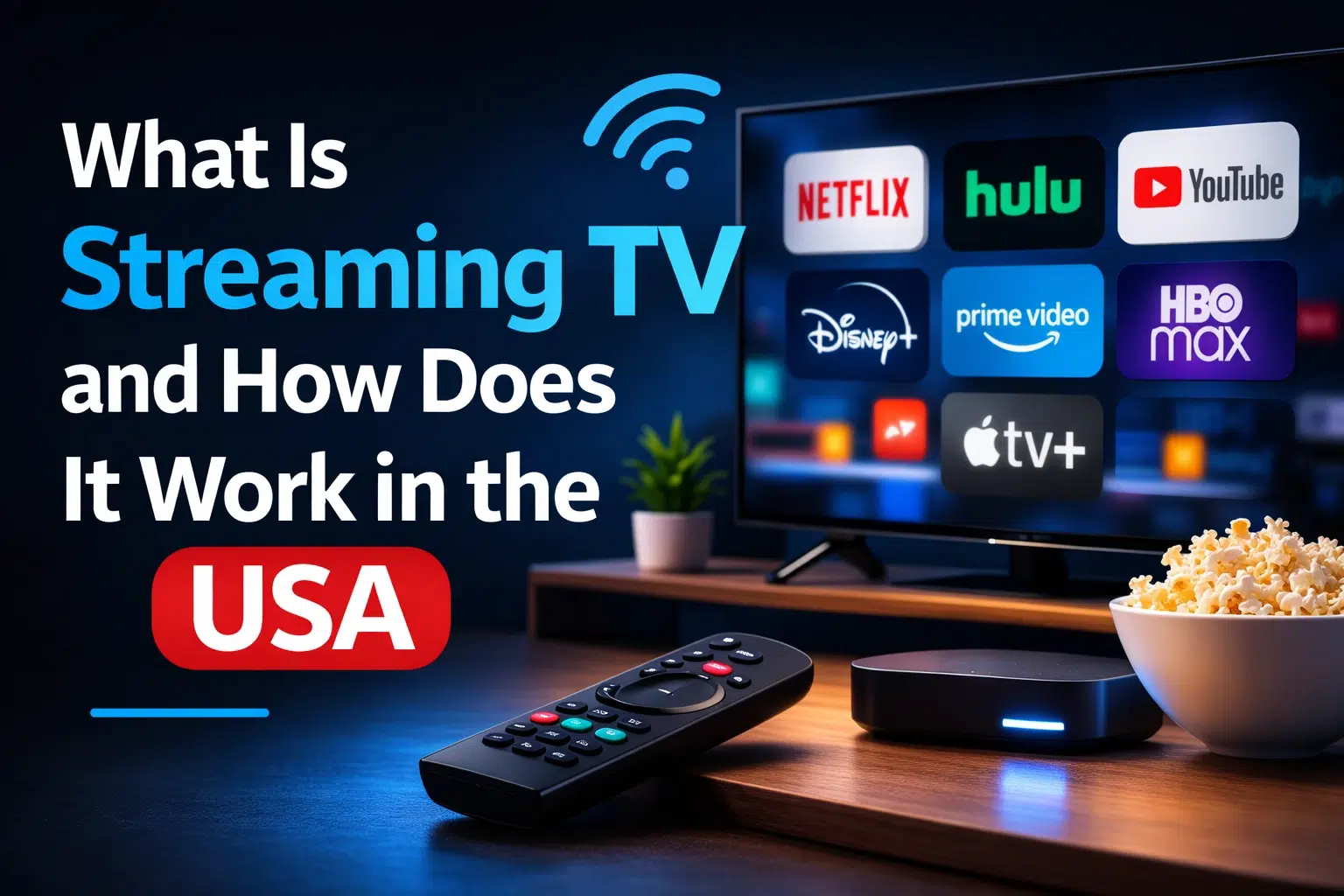
Streaming TV is a television service that delivers video content through the internet instead of through physical cables or satellite dishes.
When you watch streaming TV, the program is not downloaded fully to your device. Instead, the video is sent to you in small pieces over the internet and played instantly on your screen. This process is called “streaming.”
In simple terms, streaming TV means:
- You watch TV using the internet.
- There is no traditional cable connection.
- Content plays in real time as it arrives on your device.
This technology allows you to watch shows on many devices, not just on a traditional television.
How does streaming TV work?
To understand streaming TV, it helps to know what happens technically, but without going too deep into complex terms.
First, the streaming service stores movies, shows, or live TV channels on large servers located in data centers. These servers are connected to high-speed internet networks.
When you open an app and press play, your device sends a request to the streaming service. The server then sends the video to your device in small data packets. As soon as the first packets arrive, playback starts, while the rest of the video continues to load in the background.
This is why:
- You can start watching quickly.
- The video adjusts its quality based on your internet speed.
- You can pause, rewind, or fast-forward easily.
The entire process depends heavily on the quality and stability of your internet connection.
Types of Streaming TV Services in the USA
Streaming TV is not a single type of service. In the United States, it usually falls into two main categories.
On-Demand Streaming Services
These services allow you to watch content whenever you want. Examples include platforms that offer movies, series, and documentaries from large libraries.
With on-demand streaming:
- There is no fixed schedule.
- You choose what to watch and when to watch it.
- Most content is pre-recorded.
This is the most common form of streaming today.
Live TV Streaming Services
These services work more like cable TV but use the internet instead of cables.
With live TV streaming:
- Channels are broadcast in real time.
- You follow a fixed program schedule.
- You can watch news, sports, and live events.
Many people use live streaming services as a replacement for traditional cable.
What Devices Can You Use for Streaming TV?
One of the biggest advantages of streaming TV is flexibility.
You can watch streaming TV on:
- Smart TVs with built-in apps
- Streaming devices connected to your TV
- Laptops and desktop computers
- Tablets and smartphones
As long as the device has an internet connection and supports the streaming app, you can use it to watch content.
This multi-device support is one of the main reasons streaming TV became so popular in the USA.
What Internet Speed Do You Need for Streaming TV?
Internet quality plays a major role in streaming performance.
In general:
- Standard definition streaming works with low speeds.
- High-definition streaming needs moderate speeds.
- 4K streaming requires fast and stable connections.
If your internet is slow or unstable, you may experience buffering, lower picture quality, or interruptions.
For households that stream on multiple devices at the same time, a stronger internet plan is usually necessary.
How Streaming TV Is Different from Cable TV
Although both provide television content, streaming TV and cable TV work in very different ways.
Cable TV uses physical cables and follows a fixed schedule. You watch whatever is being broadcast at that time.
Streaming TV uses the internet and gives you more control. You can choose what to watch, when to watch it, and on which device.
Another major difference is portability. Cable TV usually works only at home, while streaming TV can be used anywhere with an internet connection.
Advantages of Streaming TV
Streaming TV has several clear benefits that attract modern users.
One major advantage is flexibility. You are not limited to a TV in your living room. You can continue watching a show on your phone, laptop, or tablet.
Cost is another factor. Many streaming services are cheaper than cable TV packages, especially if you choose only a few subscriptions.
Streaming TV also offers a large amount of on-demand content. You can watch entire seasons, old movies, and exclusive shows that are not available on traditional TV.
Finally, there are usually no long-term contracts. Most services can be canceled anytime without penalties.
Disadvantages of Streaming TV
Streaming TV is not perfect, and beginners should understand its limitations.
The biggest dependency is on the internet. If your internet is slow, unstable, or goes down, streaming TV will not work properly.
Another issue is subscription overload. Many people subscribe to multiple services, which can increase monthly costs more than expected.
Live sports and local channels are also sometimes limited, depending on the service and your location.
Who Should Choose Streaming TV in 2026?
Streaming TV is especially suitable for certain types of users.
It works well for people who prefer watching on-demand shows instead of following fixed schedules. It is also ideal for younger users, travelers, and households that use multiple devices.
People who want to save money and avoid long contracts often prefer streaming.
However, users who rely heavily on live TV, local news, or have unreliable internet may find cable TV more practical.
Is Streaming TV the Future of Television?
In 2026, streaming TV is clearly a dominant force in the American television market.
More content is being produced exclusively for streaming platforms. Younger audiences prefer streaming over traditional TV. At the same time, many households now use a combination of streaming and cable.
Rather than completely replacing cable, streaming TV is reshaping how people consume television.
Common Beginner Mistakes
New users often make a few common mistakes with streaming TV.
Some people underestimate the importance of internet speed and choose plans that cannot support smooth streaming. Others subscribe to too many services without tracking costs.
Many beginners also forget to check device compatibility before subscribing. Being aware of these issues can save money and frustration.
Conclusion
Streaming TV is an internet-based way to watch television that offers flexibility, convenience, and access to a vast amount of content.
For beginners in the USA, the key is to understand how streaming works, choose the right type of service, and make sure your internet connection is strong enough to support it.
In the next guide, we will compare cable TV and streaming TV directly and help you decide which option is better for your needs in 2026.
FAQs:
Q. Is streaming TV free in the USA?
Ans: Some streaming platforms offer free content with ads, but the most popular streaming TV services in the USA require a monthly subscription.
Q. Do I need a smart TV to use streaming services?
Ans: No, a smart TV is not mandatory. You can use streaming TV on a regular television by connecting a streaming device.
Q. How much internet data does streaming TV use?
Ans: Streaming TV can use a significant amount of data, especially for high-definition and 4K content. Watching in higher quality consumes more data, so users with limited data plans should monitor their usage carefully.
Q. Can I watch live sports on streaming TV?
Ans: Yes, many live TV streaming services offer sports channels. However, the availability of specific sports networks may depend on the service and your location in the USA.
Q. Is streaming TV cheaper than cable TV?
Ans: In many cases, streaming TV is cheaper than cable TV, especially if you subscribe to only a few services.
Q. What happens if my internet is slow?
Ans: If your internet is slow or unstable, you may experience buffering, reduced picture quality, or interruptions. A stable and reasonably fast internet connection is important for smooth streaming.
Q. Can I cancel streaming services anytime?
Ans: Most streaming services allow you to cancel at any time without long-term contracts. This is one of the main advantages compared to traditional cable TV.
Q. Is streaming TV suitable for seniors?
Ans: Yes, many streaming apps are easy to use, but some seniors may prefer cable TV because of its simpler remote-based system. It depends on personal comfort with technology.
Read Also:
Best TV Services for Sports Lovers
How Parental Controls Work on TV Services
How to Set Up Streaming TV on Smart TV
Best TV Packages for Families in the USA